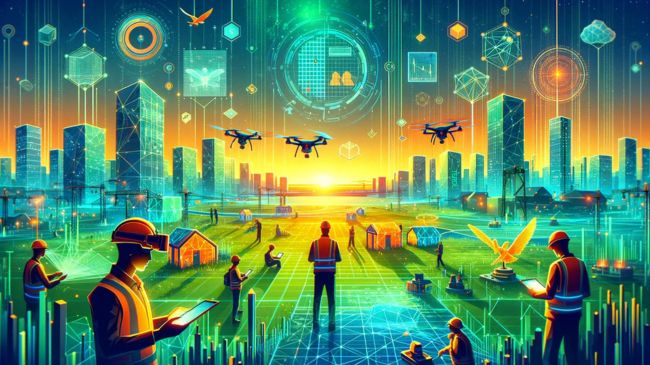
Cities are getting bigger, busier, and more complex every day. Civil engineers are under pressure to design spaces that are not only strong and safe, but also efficient, sustainable, and future-ready. That is where augmented reality steps in and shakes things up in a fun and powerful way.
Instead of relying only on blueprints and 3D models on screens, augmented reality allows engineers to see their designs right in the real world. Imagine standing on an empty lot and seeing a full bridge, road, or drainage system appear in front of you. Sounds like science fiction, but it is already happening.
Let’s explore how augmented reality is helping civil engineers design smarter cities, reduce errors, and create better infrastructure for everyone.
What is augmented reality in civil engineering
Before we dive deeper, let’s break it down in simple terms. Augmented reality is a technology that adds digital images and data on top of the real world. You can view it through smartphones, tablets, or AR glasses.
For civil engineers, this means they can overlay digital models of roads, buildings, and utilities onto real locations. Instead of guessing how something will look, they can actually see it in place.
This makes planning more accurate and a lot more exciting.

Visualizing smart city infrastructure before construction
One of the biggest advantages of augmented reality is the ability to visualize projects before construction even begins.
Imagine planning a new highway. With traditional methods, engineers look at drawings and simulations. With augmented reality, they can stand on-site and see the road layout, lane markings, and even streetlights in full scale.
This helps answer key questions early:
- Will the road fit well with the surroundings
- Are there obstacles like trees or utilities
- How will traffic flow
By seeing everything ahead of time, engineers can make smarter decisions and avoid costly changes later.
Improving design accuracy and reducing errors
Mistakes in civil engineering projects can be expensive and time-consuming. A small design issue can turn into a big construction problem.
Augmented reality helps reduce these risks by giving engineers a clearer view of their designs.
Instead of checking measurements on paper, they can:
- Compare digital models with the real environment
- Spot clashes between structures and utilities
- Adjust designs instantly
This level of accuracy leads to better results and fewer surprises during construction.
Enhancing collaboration across teams
Civil engineering projects involve many people, from designers and contractors to city planners and stakeholders. Communication is not always easy.
Augmented reality makes collaboration more visual and interactive.
Instead of explaining plans with technical drawings, teams can:
- Walk through a project together using AR
- See the same design from the same perspective
- Discuss changes in real time
This reduces confusion and helps everyone stay on the same page.
Speeding up decision-making
Time is critical in infrastructure projects. Delays can cost money and affect entire communities.
With augmented reality, decisions can be made faster because information is easier to understand.
For example:
- City officials can quickly approve designs after seeing them in AR
- Engineers can test multiple design options on-site
- Problems can be identified and solved immediately
This leads to smoother workflows and faster project timelines.
Creating more sustainable and smarter cities
Smart cities focus on efficiency, sustainability, and a better quality of life. Augmented reality plays a big role in achieving these goals.
Engineers can use AR to:
- Plan energy-efficient systems like solar-powered roads and lighting
- Optimize drainage and water management systems
- Design greener spaces with better land use
By visualizing these elements early, cities can become more sustainable and resilient.
Improving safety on construction sites
Safety is always a top priority in civil engineering. Augmented reality helps reduce risks by improving awareness and training.
Here is how:
- Workers can see hidden utilities before digging
- Hazard zones can be highlighted in real time
- Training simulations can prepare teams for real scenarios
When everyone can see potential dangers clearly, accidents are less likely to happen.
Saving costs in the long run
At first glance, adopting new technology might seem expensive. But augmented reality can actually save money over time.

It reduces:
- Design errors
- Construction delays
- Rework and material waste
By catching problems early and improving efficiency, projects stay on budget more often.
Real-world applications of augmented reality in smart cities
Augmented reality is already being used in many civil engineering projects around the world.
Some examples include:
- Visualizing underground utilities before excavation
- Planning transportation systems like railways and highways
- Designing flood control and drainage systems
- Creating interactive city models for public engagement
These applications show how powerful AR can be in shaping modern cities.
Challenges to consider
While augmented reality offers many benefits, it is not without challenges.
Some common issues include:
- High initial setup costs
- Need for training and skilled users
- Hardware limitations in certain environments
However, as technology continues to improve, these challenges are becoming easier to manage.
The future of augmented reality in civil engineering
The future of augmented reality in civil engineering looks bright.
As AR tools become more advanced and affordable, more companies will adopt them. We can expect:
- Better integration with BIM and GIS systems
- More realistic and detailed visualizations
- Wider use of AR glasses on construction sites
In the coming years, augmented reality may become a standard tool for designing and building smarter cities.
Final thoughts
Civil engineering is no longer just about concrete and steel. It is about innovation, efficiency, and creating better spaces for people to live and work.
Augmented reality is helping engineers move beyond traditional methods and design with confidence. By visualizing infrastructure before construction, improving accuracy, and enhancing collaboration, AR is shaping the cities of tomorrow.
If your civil engineering company wants to stay ahead, now is the time to explore what augmented reality can do for your projects.
Ready to build smarter cities
Curious about how augmented reality can transform your next project? Start exploring AR tools, test them on small projects, and see the difference for yourself.
Have you tried using augmented reality in your designs? Share your experience or questions, and let’s talk about building smarter cities together.